Holualoa
15,500 square feet | tucson, arizona
architect: repp + mclain design and construction
general contractor: repp + mclain design and construction
materials: perforated custom corrugated metal, flat metal panels, glass and concrete
photographs: Bill Timmerman
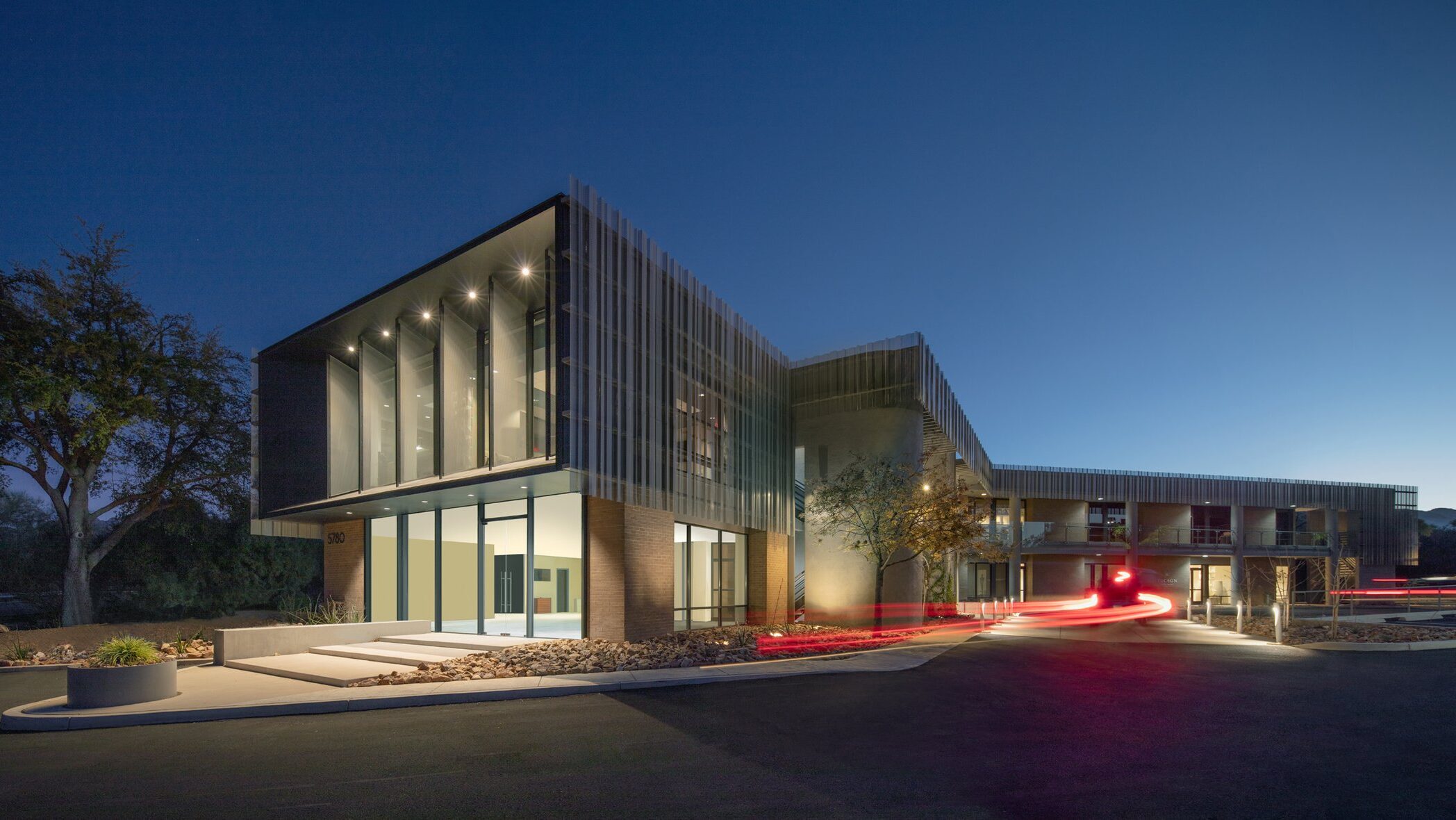
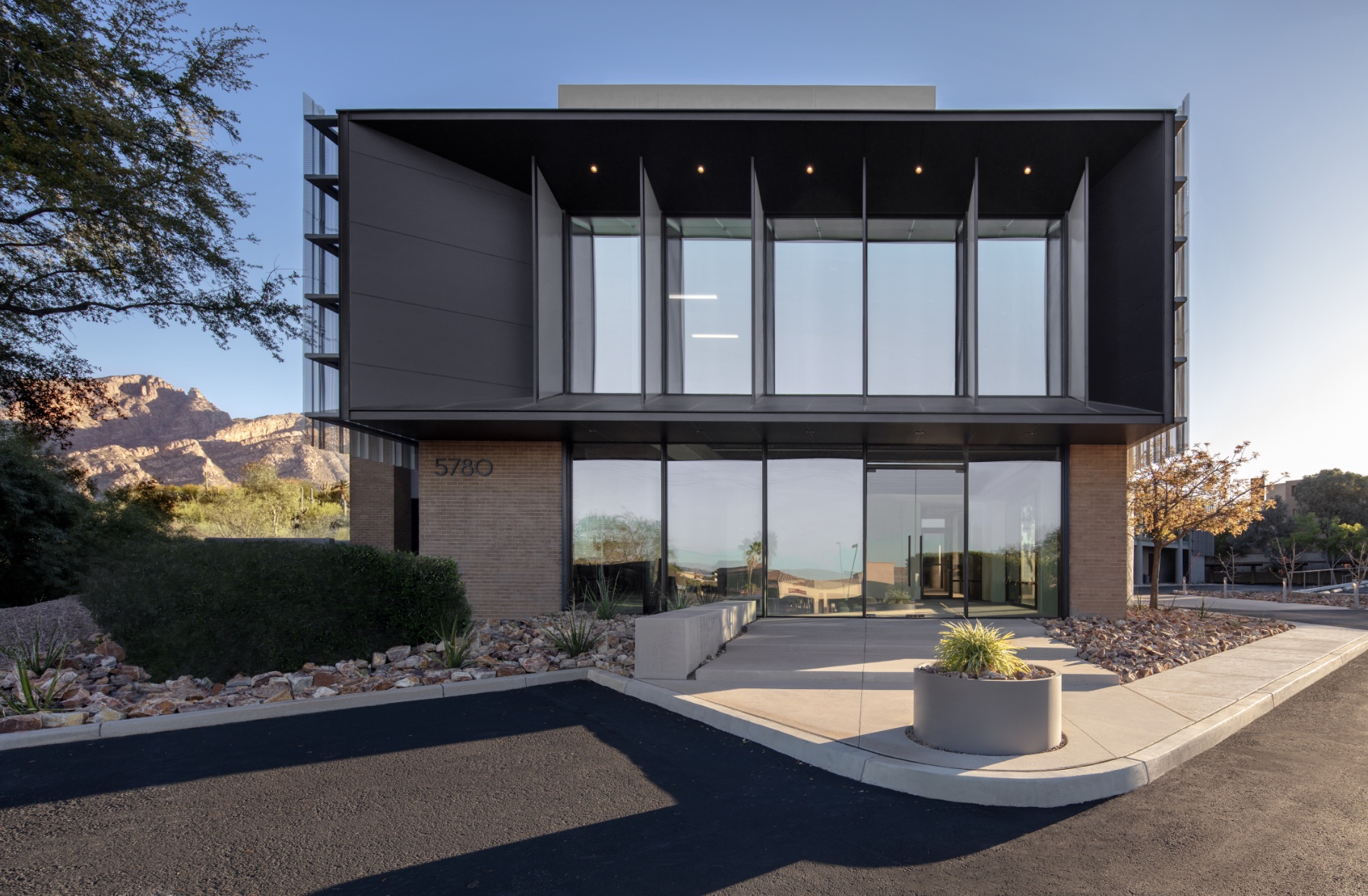
The Holualoa project involved the comprehensive reimagining of a 15,500-square-foot structure in Tucson, Arizona. Originally constructed in the 1980s, the building was defined by traditional Brutalist proportions: thick masonry walls, flat facades, heavy railings, and deep, shadowed soffits. The primary objective was to facilitate the relocation of the owners’ headquarters to the second floor while maintaining a leasable first-floor footprint. To achieve this, the design team focused on a transformative exterior remodel that would simultaneously guide visitors’ attention upward and establish a distinct, modern identity for the upper level.
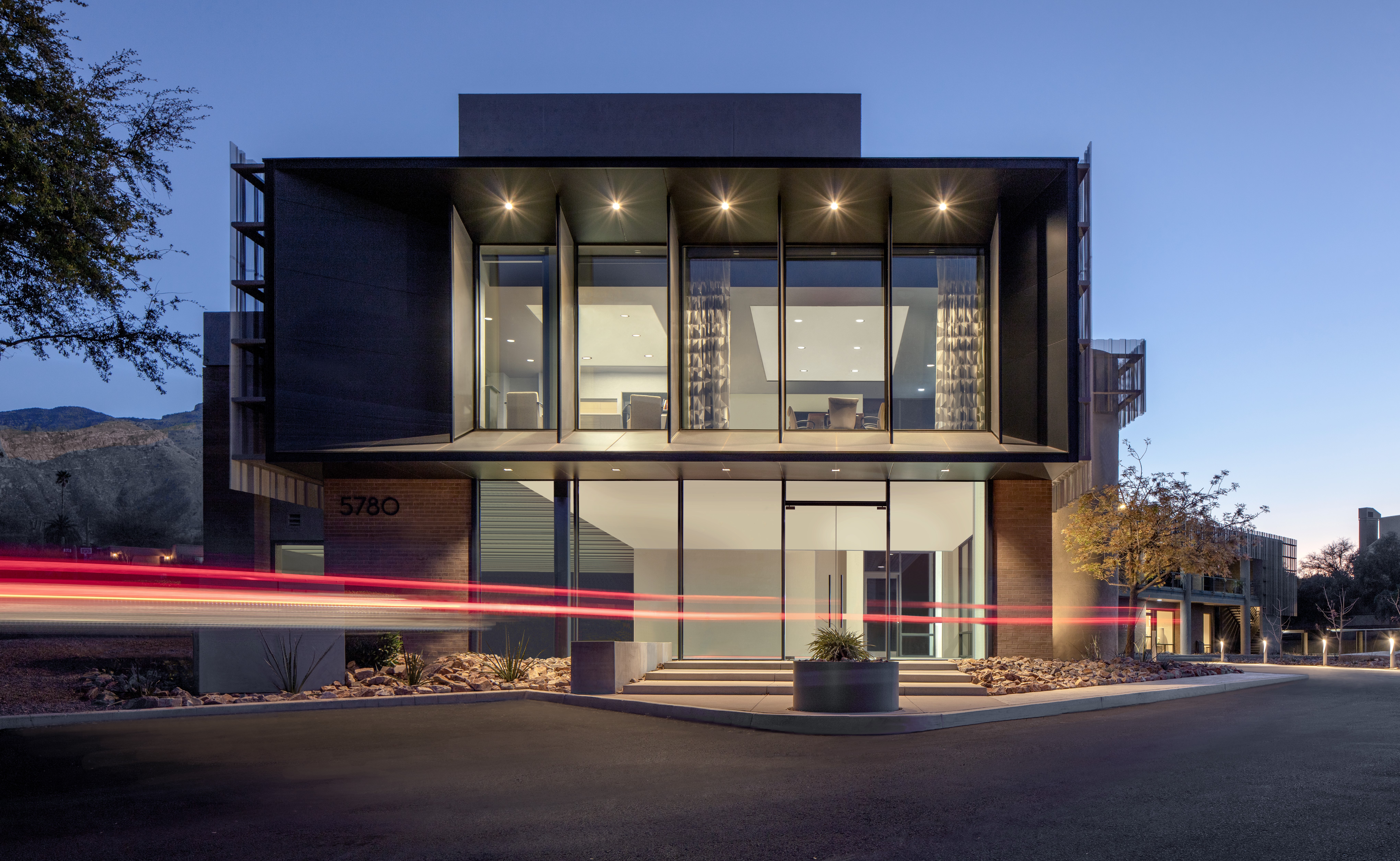
The project’s modern aesthetic is defined by a sophisticated mix of industrial and structural materials chosen for their durability and visual impact:
+ Perforated Custom Corrugated Metal: Provides dynamic shading and a textured architectural identity.
+ Flat Metal Panels: Offers clean transitions and a sharp, contemporary finish.
+ Glass and Concrete: Balances transparency with the foundational weight of the original structure.
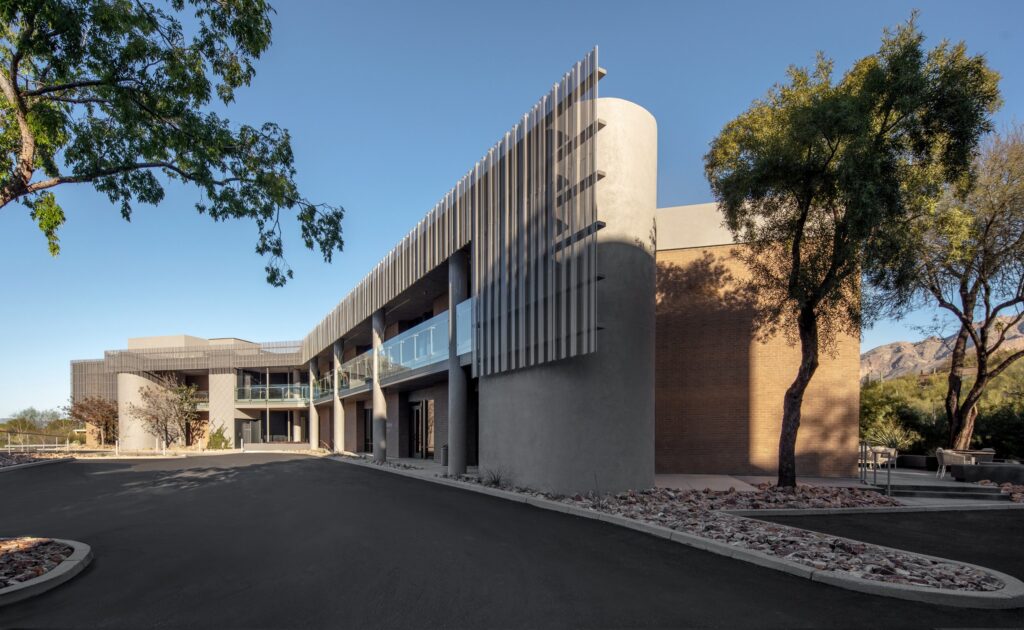
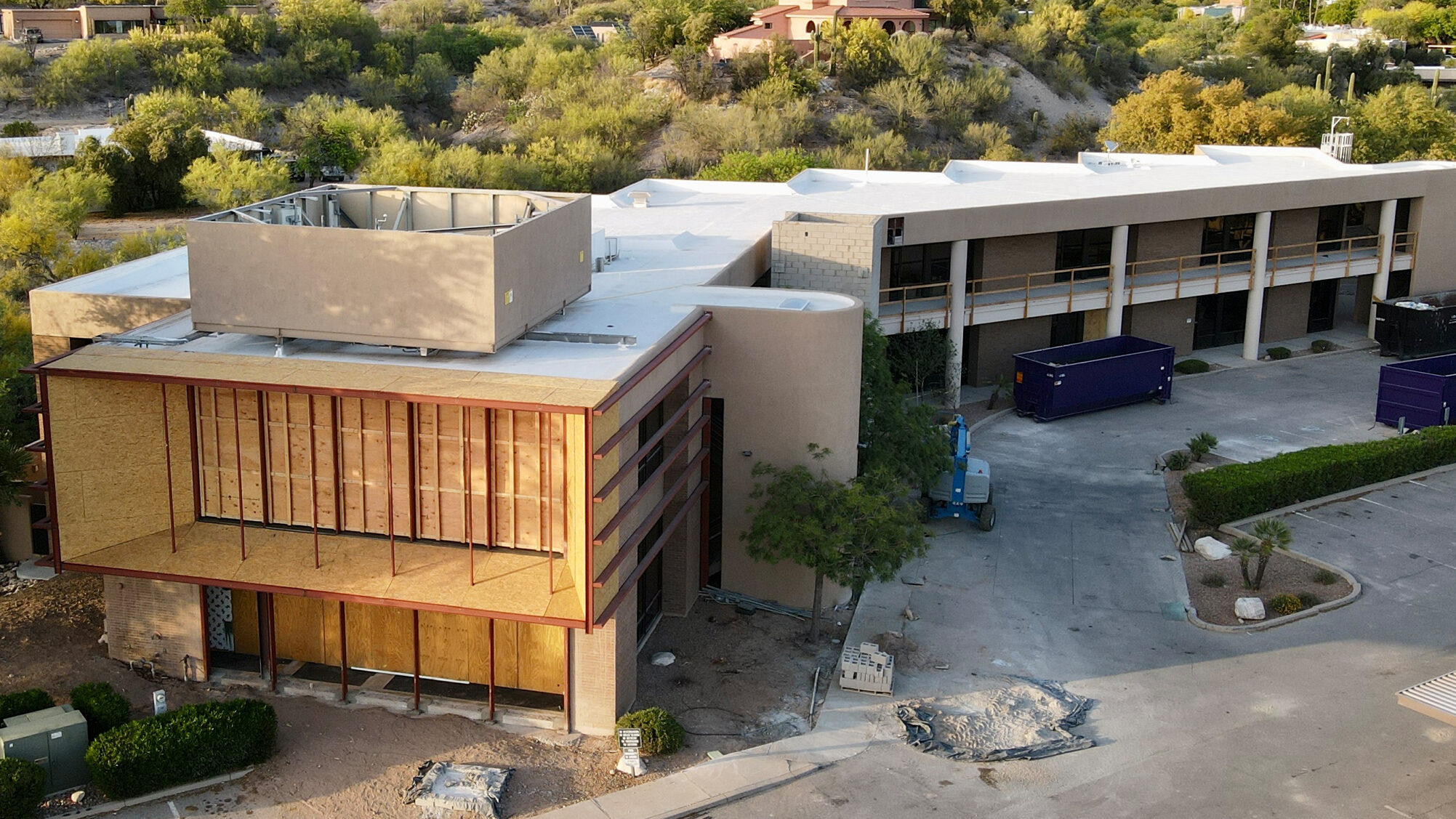
The transformation was driven by a need for increased natural light and enhanced environmental performance. We carefully articulated new openings within the existing masonry facade to invite daylight deep into the interior workspace.
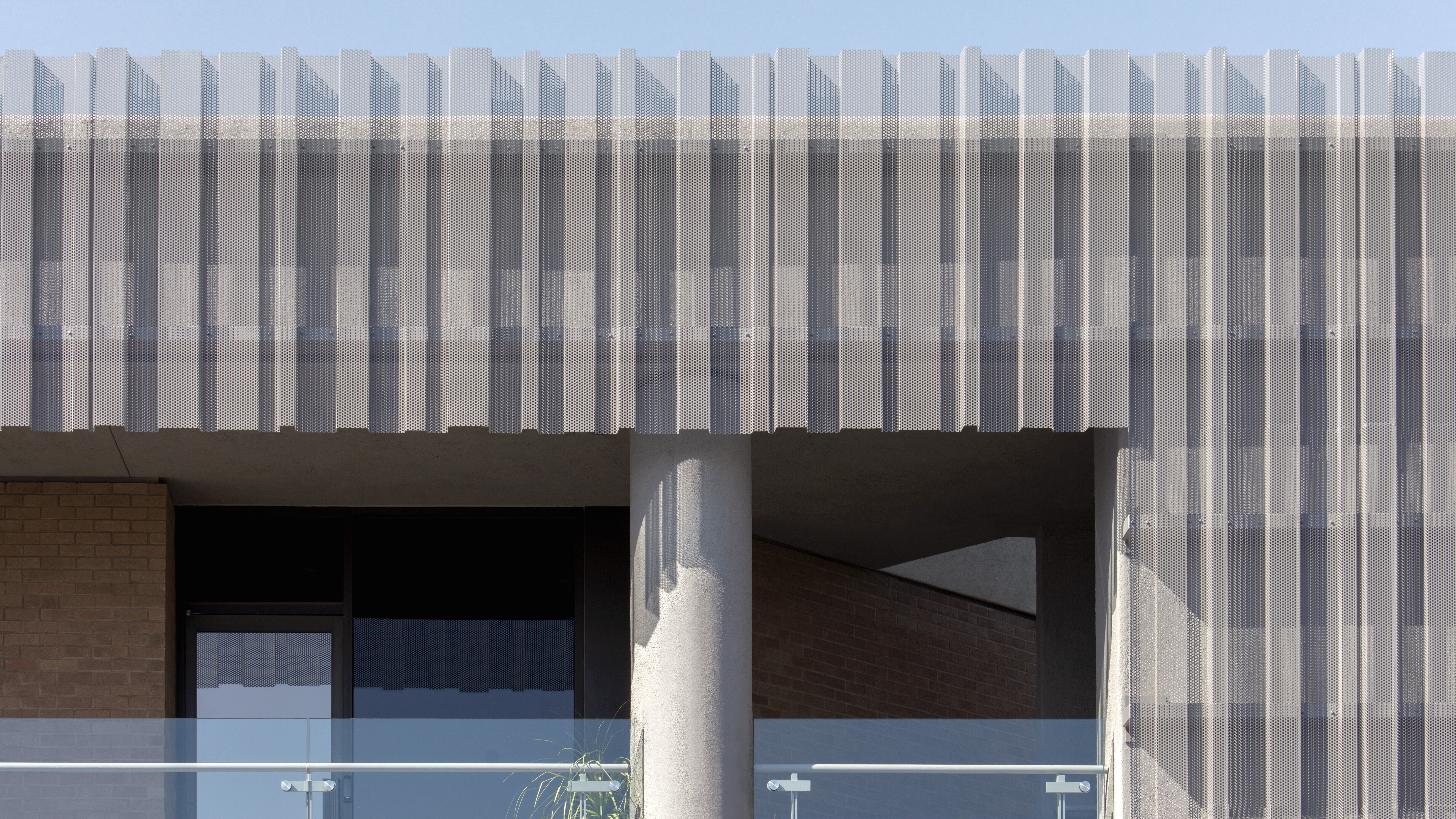
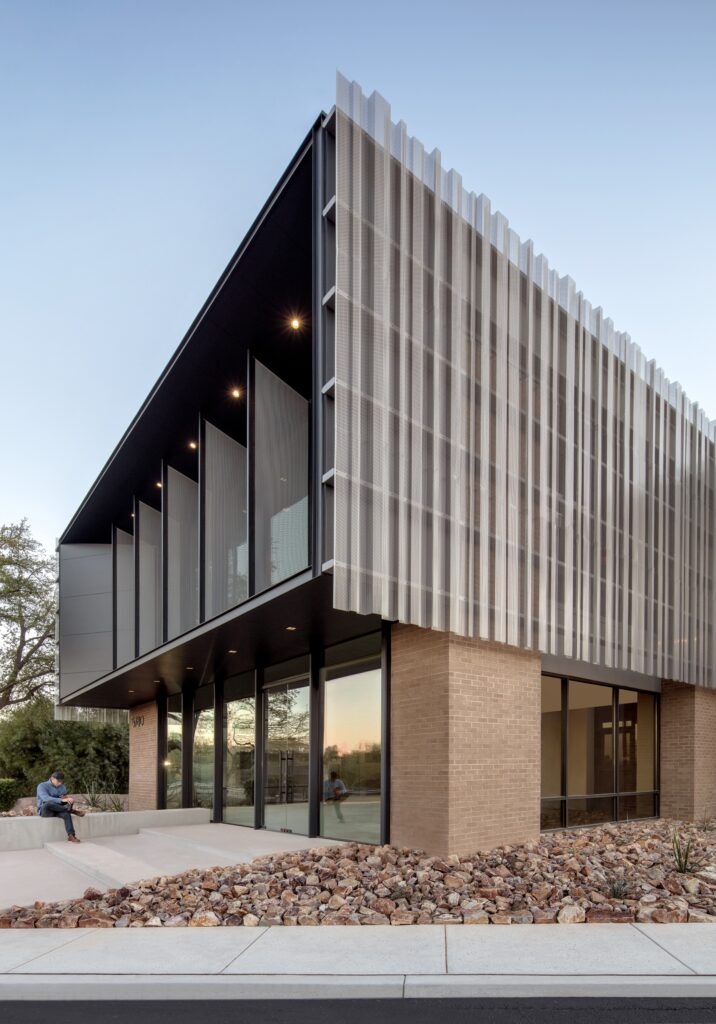
Over these openings, we installed a custom-designed perforated aluminum scrim. This secondary skin serves a dual purpose: it creates a bold, cohesive presence for the second-floor occupants while providing essential solar shading for the building’s envelope.
The custom corrugated pattern produces a textured surface that catches the desert light, resulting in a facade characterized by ever-changing shadow lines and a sense of visual depth.
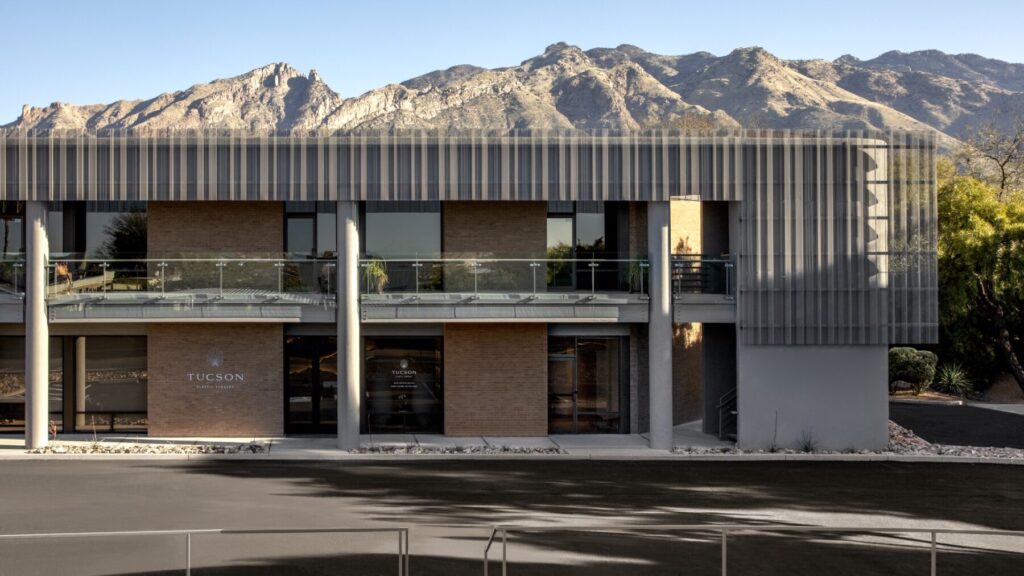
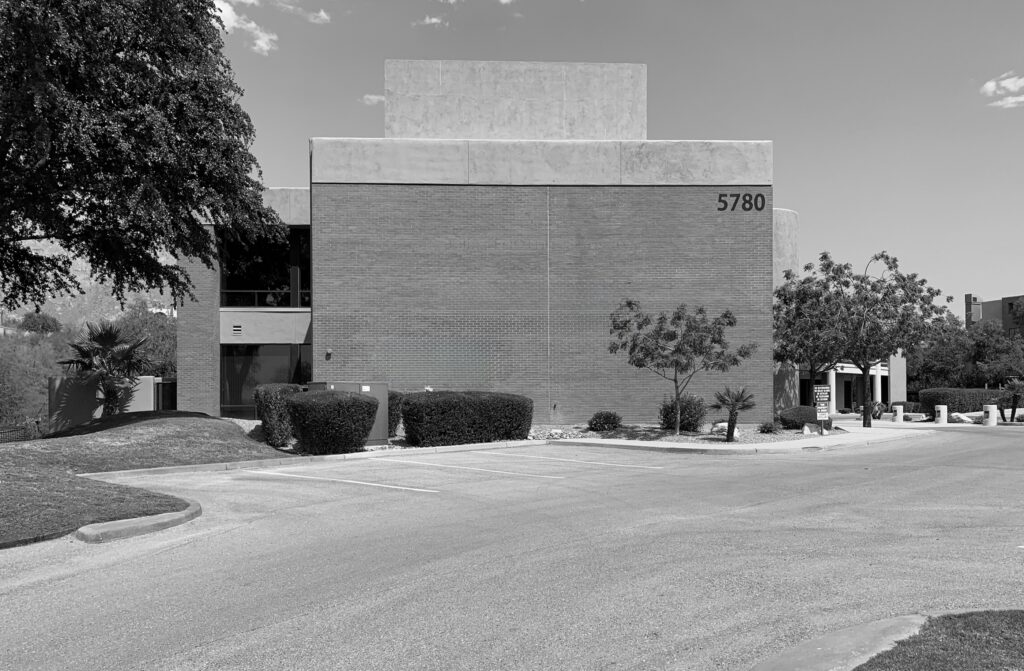
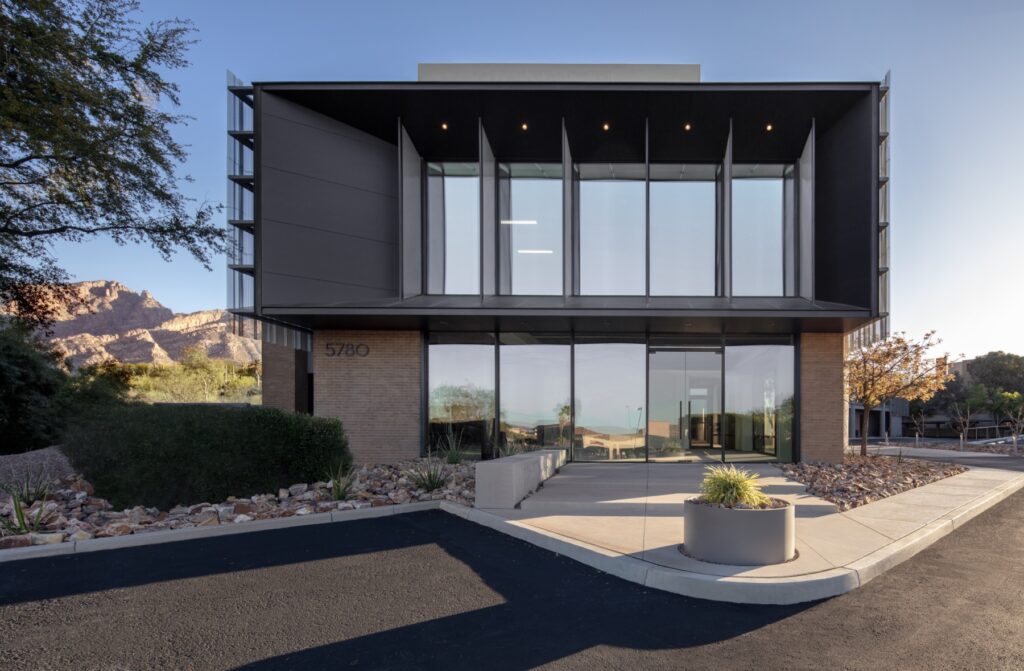
These before and after views illustrate the power of adaptive reuse: by strategically opening the existing shell and introducing a custom-patterned metal scrim, we’ve transitioned a dated 1980’s brutalist structure into a high-performance, contemporary headquarters.